Which Part of Italy Is This Menu Cooking From?
By Nico Ferraro · July 28, 2026 · 6 min read
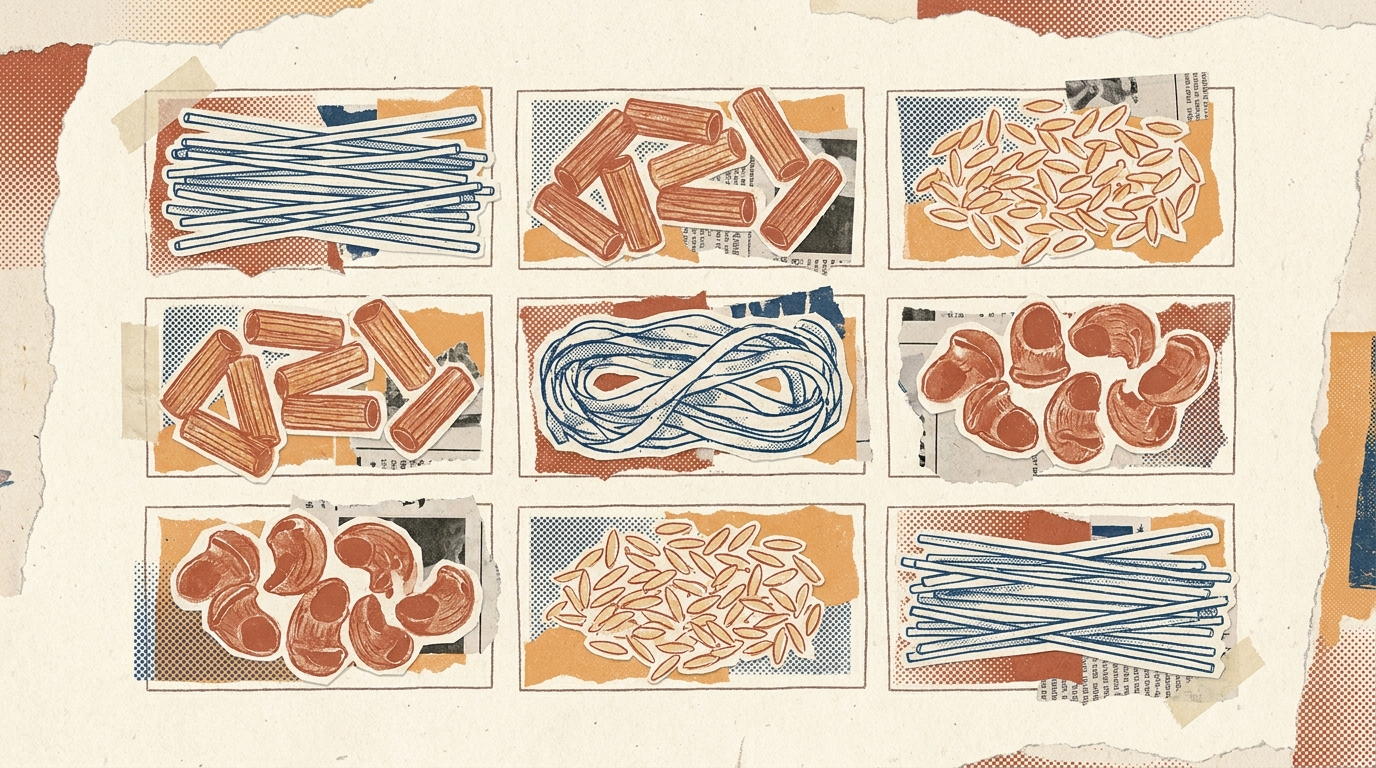
Three things on a menu give away which part of Italy a kitchen is working from, and none of them is the word on the awning. The first is the pasta shape, because shapes are regional in a way sauces are not. The second is the fat: butter and cream point north, olive oil points south. The third is tomato, which arrived late and unevenly, so a menu with almost none of it is telling you something specific. Nothing in a phrase like “italian restaurant nyc” narrows any of that down. Here is how the tells read across seven Manhattan menus, all of them checked against the restaurant’s own listing in early August 2026.
The short version
Egg pasta and butter mean Emilia-Romagna or Piedmont. Durum wheat, olive oil and chili mean Campania, Puglia or Sicily. Pecorino instead of parmigiano points to Rome or further south, since sheep grazed where cattle could not. Tomato in nearly everything usually means Italian-American rather than any Italian region at all, which is its own tradition and not a lesser one.
Emilia-Romagna: egg, butter, filled shapes
The northern tell is egg in the dough and butter in the pan. Emilian pasta is rolled thin, cut into ribbons or folded into parcels, and the sauces are rich enough that portions stay small.
Rezdôra at 27 East 20th Street is the clearest example in the city and does not hide it. The menu names the region inside the dishes: Anolini di Parma at $26, Cappellacci di Friggione at $26, a Doppio Cappelletti in Primavera at $28 and a Tagliolini al Ragu listed only as “from modena” at $28. The Gnocco Fritto starter at $18, fried dough served with prosciutto, mortadella and guanciale, is a regional fixture rather than a menu invention.
Filled shapes dominate, and that is the giveaway. Cappelletti, anolini and cappellacci are all parcels, and a kitchen making three different ones has a pasta cook doing that all day rather than sampling the technique.
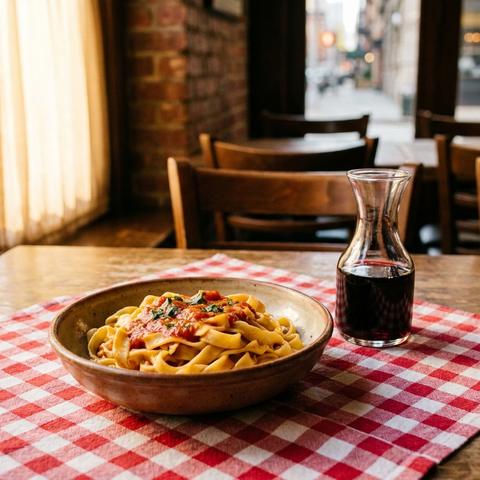
L’Artusi at 228 West 10th Street offers a subtler version. Its tagliatelle is listed with bolognese bianco at $27, a white ragù. A bolognese without tomato sounds like a modern conceit and is closer to the older reading of the dish, where meat, wine and dairy carry it. If you want to understand why Emilian food is not tomato food, order that plate. We took the longer route through that argument in what a real ragù actually looks like.
Rome: sheep’s cheese, pepper, no cream
Roman pasta is built on pecorino, guanciale, egg and black pepper in various combinations, and the four canonical dishes are cacio e pepe, carbonara, gricia and amatriciana. Tomato appears in exactly one of them.
Tarallucci e Vino at 15 East 18th Street lists a cacio e pepe at $26 on handmade tonnarelli and a carbonara at $28 on homemade mezze maniche with guanciale and pecorino. It also lists something more interesting: Nonna Michelina’s Chitarra con Pallottine at $29, chitarra pasta with tiny meatballs, which is Abruzzese rather than Roman. Abruzzo sits east of Lazio and the cooking overlaps at the edges, so a menu carrying both is showing you a real geography rather than a marketing one. The Lasagna al Pesto at $30 on the same page is Ligurian, from the opposite coast, so read this as a house that travels.
The guanciale-and-pecorino logic is worth learning on its own terms, and we pulled it apart in the carbonara technique guide.
Campania and the south: durum, oil, sea
Southern pasta is made from durum wheat and water rather than egg, which is why it holds a bite and stands up to assertive sauces.
Zero Otto Nove at 15 West 21st Street names its region repeatedly. There is a Rigatoni Salernitana at $30, pointing at Salerno on the Amalfi coast, and both a Radiatori in Cartoccio at $30 and a Branzino in Cartoccio at $38 that use the paper-parcel cooking common along that coast, where steaming in a sealed pouch keeps fish and pasta moist without added fat. The Tubettini con Polipo at $34, small tubes with grilled octopus, fava beans and baby clams, is a southern seaside dish through and through. This is the most regionally consistent southern menu in the Flatiron, and there is more on that whole category in our piece on seafood pasta and the southern tradition.
Tuscany: meat, beans, restraint
Tuscan cooking is plain in the sense that it does not disguise anything. Via Carota at 51 Grove Street lists a pappardelle with wild boar ragu at $28, which is the Tuscan signature: broad ribbons, game, long cooking, nothing else competing.
The tortelli with butternut squash at $25 on the same menu belongs further north around Mantua, and the risotto with meyer lemon at $26 is a rice dish rather than a pasta one, which is a northern habit. The room calls itself an osteria, and an osteria menu is supposed to be short and unfussy rather than comprehensive.
Northern Italy proper: veal, barolo, truffle
Novitá at 102 East 22nd Street reads north across the whole menu. There is a Vitello alla Milanese at $39 from Lombardy, a Filetto di manzo al barolo at $45 cooked in Piedmontese wine, and a Carpaccio di manzo con tartufi neri at $27.50. The Pappardelle con ragú d’agnello at $32 uses lamb rather than beef, and the Spaghettini neri ai frutti di mare at $34 uses squid ink. This is a menu with money and butter in it, and it eats accordingly.
Italian-American: tomato, garlic, generosity
Rubirosa on Mulberry Street is not pretending to be regional and is better for it. The Sunday Sauce, served Sundays only, goes over spaghetti or lumache and is the defining dish of the Italian-American table, with no single Italian region behind it. It comes from southern immigrant households cooking with more meat than they could have afforded at home. There is also a Lumache alla Vodka, and vodka sauce is a New York invention of the late twentieth century rather than an import.
When a kitchen picks no region at all
Plenty of good rooms do not pick one, and it is worth knowing when you are looking at one that has not. A menu carrying a Roman cacio e pepe, an Emilian ragù, a fra diavolo and a vodka sauce on the same page is not confused. It is assembling a list around what a mixed table in Manhattan will actually order.
That solves a real problem. If you are feeding four people who cannot agree, where one wants the Roman dish and one wants the vodka sauce they grew up with, a strict single-region kitchen creates friction that a pan-regional one does not. The trade is technical depth: a kitchen doing everything rarely does any one thing as tightly as a specialist.
Read the menu for commitment rather than for authenticity. Three filled shapes from the same region means one thing. One of everything means another. Neither is a verdict on the cooking.
Frequently Asked Question
Does it actually matter whether a restaurant sticks to one region?
Not for whether the food is good, but it tells you what the kitchen is optimizing for. A single-region menu is usually a technical commitment, and the execution tends to be tighter because the same hands repeat the same shapes daily. A pan-regional menu is optimizing for the table rather than the tradition, which matters more when your group has mixed tastes or when someone at it does not want to eat unfamiliar food. Neither approach wins in the abstract. The mistake is walking into a strict regional kitchen expecting a dish you had somewhere else, then being disappointed it is not on the page.
Before you order
Menus move with the season, and August is when the summer dishes start giving way. Everything above was read from each restaurant’s own published menu in early August 2026, so check the current one before you go looking for a specific plate.
If you would rather start from a neighborhood than from a region, there is a ranked read by neighborhood worth having open, and a block-by-block walk through Italian dinner in Gramercy for the stretch where several of these sit.