Tagliatelle Bolognese in NYC: what a real ragù looks like, and where to find one
By Nico Ferraro · August 3, 2026 · 5 min read
Tagliatelle Bolognese in NYC: what a real ragù looks like, and where to find one
The dish most Americans call spaghetti bolognese does not exist in Bologna. There, the ragù goes on tagliatelle, the flat egg noodle that holds a meat sauce the way a round strand never will, and the sauce itself is a slow, milk-enriched braise closer to a pot roast than to the tomato-heavy version most people picture. If you want tagliatelle Bolognese in NYC that tastes like the real thing, it helps to know what you’re looking for first, then where a few kitchens are actually making it. Here’s both.
Quick answer
Real tagliatelle Bolognese is fresh egg pasta with a slow-cooked meat ragù from Emilia-Romagna, built on soffritto, a little tomato, wine, and often milk, with the meat as the main event and tomato playing support. In New York, you’ll find honest versions at Isabelle’s Osteria on Park Avenue South and at Rezdôra on East 20th Street, and a notable white-sauce variation at L’Artusi in the West Village. Order it where the pasta is made in house.
What Bolognese actually is
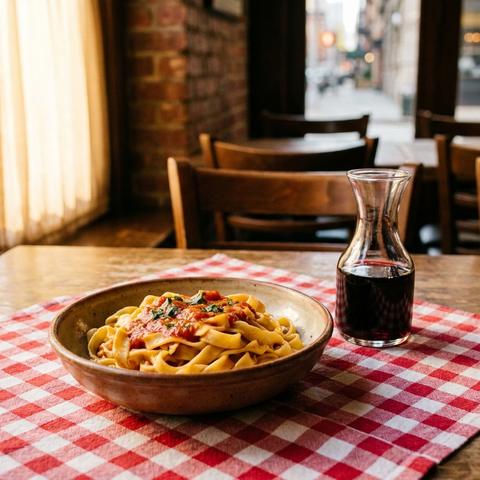
Ragù alla bolognese comes from Bologna, in the Emilia-Romagna region, and the official version registered by the local chamber of commerce is specific: ground beef, pancetta, soffritto of onion, carrot and celery, a splash of wine, a small amount of tomato, and milk added toward the end to soften the meat. It simmers for hours. The result is rich and brown, not red. Tomato is a seasoning here, not the base. That single fact separates a real Bolognese from the tomato sauce with ground beef that often gets the name.
The milk is the part people miss. Added late, it rounds off the acidity and gives the sauce its velvety texture. Skip it and you get something coarser. This is why a good Bolognese tastes creamy without any cream in it.
Why tagliatelle, not spaghetti
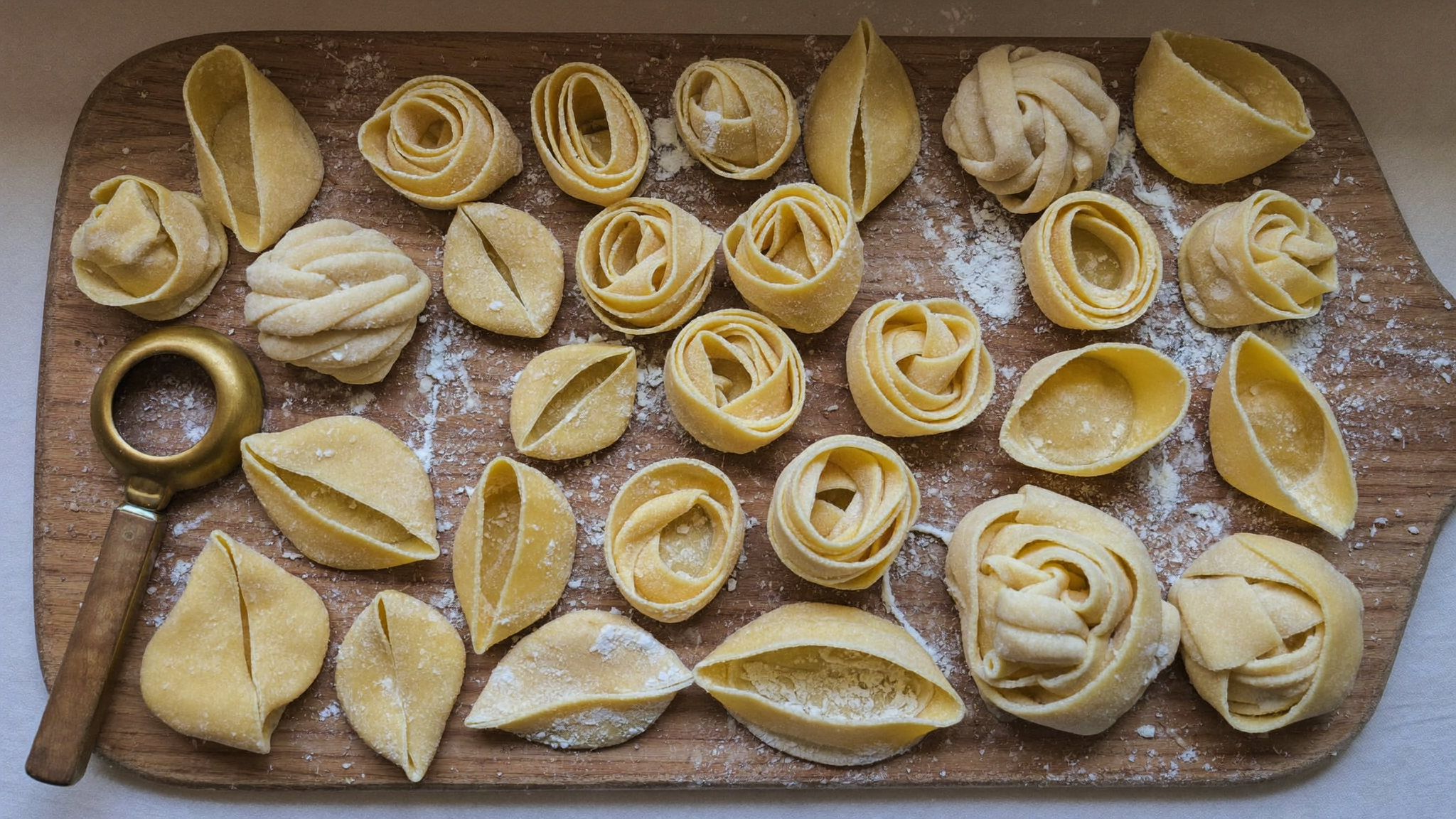
Shape is not a garnish, it’s engineering. Tagliatelle is a flat ribbon, usually made with egg, and its rough, porous surface grabs a thick meat sauce. Round, smooth, dried spaghetti sheds that same sauce onto the plate. In Bologna the pairing is close to law: ragù goes on tagliatelle, or into lasagne, or stuffed into tortellini, never onto spaghetti. When a New York menu lists “spaghetti bolognese,” it’s usually signaling that it’s cooking for expectations rather than tradition. Not wrong, exactly, but not the Emilia-Romagna dish. The same logic explains a lot about how New York kitchens pair sauces and shapes, which is worth reading on its own if you care about why the shape decides the dish.
How to read a version before you order
A few tells separate a considered Bolognese from a default one. Is the pasta made in house, and is it egg tagliatelle rather than dried spaghetti? Does the menu describe a slow-cooked or braised ragù rather than a “meat sauce”? Is the color on the plate brown-red rather than bright red? A kitchen that rolls its own pasta and braises its ragù is telling you it cares about this dish. One that offers “spaghetti bolognese” as a safe option usually isn’t building the meal around it. If you want to go deeper on what “house-made” is really promising, start with what fresh pasta actually means.
Where to find a real one in New York
Isabelle’s Osteria, Park Avenue South
Isabelle’s, at 245 Park Avenue South in Gramercy, keeps Tagliatelle Bolognese on its menu as a standing pasta rather than a seasonal special, which is the first good sign. It fits the reader who wants the classic version in a central, easy-to-reach room, with lunch, dinner, and weekend brunch service and a bar you can walk into. If you’re testing a kitchen on the dish, order it as your primo and judge the pasta and the color before anything else. Book on OpenTable or Resy, or take the bar as a walk-in. It’s one honest version among several in the city, not a crown.
Rezdôra, East 20th Street
If you want to taste what Emilia-Romagna ragù is supposed to be, Rezdôra on East 20th Street is the address. The menu is built around that region, with rolled and filled pastas and more than one ragù on the board, including a tagliolini al ragù drawn from Modena. It’s a reservation-first room and worth the planning. This is the place to understand how much the region shapes the plate, and reading up on how to tell which part of Italy a menu is cooking from will make the meal land harder.
L’Artusi, West Village
L’Artusi on West 10th Street runs a tagliatelle with a bolognese bianco, a white ragù that leaves out the tomato entirely and leans on the meat, wine, and dairy. It’s not the Bologna standard, but it’s a legitimate and delicious variation on the same idea, and it shows how much the tomato was only ever a supporting player. The kitchen also does a garganelli with mushroom ragù if you want the technique without the meat. Reserve through Resy, which releases tables two weeks out.
A note on the tomato debate
New Yorkers argue about how much tomato belongs in a ragù, and honestly, some of the best versions in town use more than a purist in Bologna would allow. That’s fine. A dish travels and changes. What separates a good New York Bolognese from a lazy one isn’t the exact tomato ratio, it’s whether the meat was cooked slowly and the pasta was made with care. If you want to see how far a sauce can drift from its origin and still be worth eating, the city’s ongoing argument over vodka sauce is a good companion read.
Frequently Asked Question
Why don’t restaurants in Bologna serve spaghetti bolognese?
Because it isn’t their dish. In Bologna the meat ragù is served on fresh egg tagliatelle, layered into lasagne, or used to fill tortellini, and the flat, porous pasta is what holds the sauce. Spaghetti is a dried, round, smooth pasta more common in southern Italy, and it lets a thick meat sauce slide off. The pairing of ragù with spaghetti spread abroad, especially in Britain and the United States, and became the version most people know. It isn’t a mistake so much as a dish that changed as it traveled, but it’s why you won’t see it on a traditional menu in Emilia-Romagna.
If you order one tagliatelle Bolognese in New York, make it at a place that rolls its own pasta and braises its ragù. That’s where the dish is treated as the main event instead of a familiar name to reassure nervous diners.
Everything else, the exact tomato ratio and the argument that comes with it, is just dinner conversation.
Editor’s note: Isabelle’s Osteria is affiliated with this publication. Restaurants were selected using the criteria described above.